
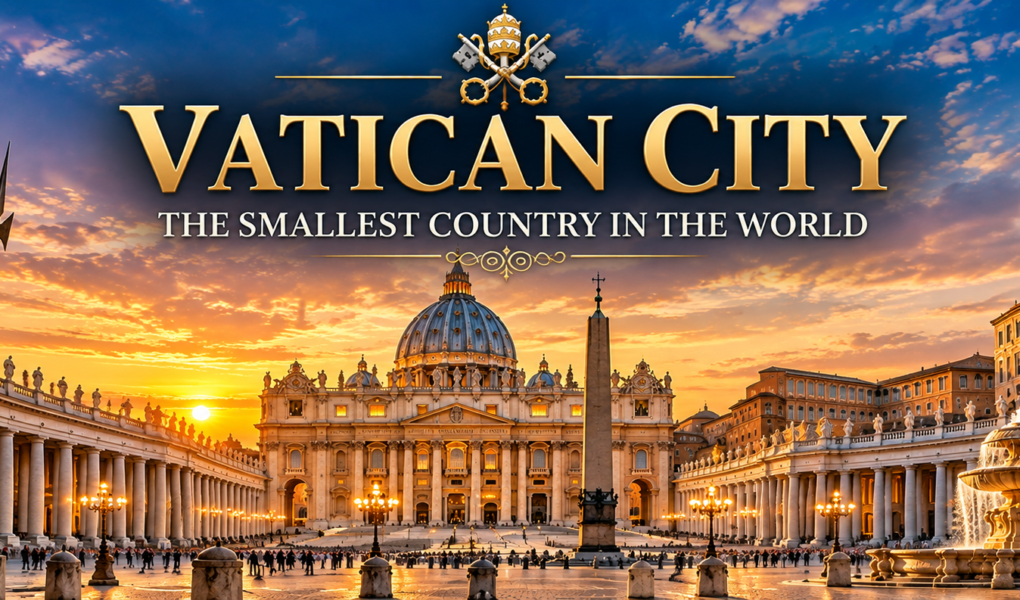
Vatican City and Everything You Need to Know
Hidden within the heart of Rome, surrounded by historic streets and magnificent Italian architecture, lies one of the most extraordinary places in the world: Vatican City. Small in size but enormous in historical, cultural, and spiritual importance, this independent state attracts millions of visitors every year.
Home to the Pope, the centre of the Roman Catholic Church, and a remarkable collection of artistic and architectural treasures, Vatican City offers a unique experience unlike any other destination. Here, centuries of history meet world-famous masterpieces, monumental buildings, beautiful gardens, and traditions that continue to shape religious life around the globe.
But Vatican City is much more than St. Peter’s Basilica and the Vatican Museums. It is a sovereign state with its own government, security services, postal system, and distinctive identity. Its streets and squares tell stories of emperors, popes, artists, architects, and pilgrims who have left their mark on history.
Whether you are planning your first visit to Rome or simply want to learn more about the world’s smallest country, this guide covers everything you need to know about Vatican City, including its history, most important landmarks, fascinating facts, and practical tips for visitors.
1. Where Is Vatican City?
Vatican City is located in western Rome, the capital of Italy. It is an independent sovereign state entirely surrounded by Italian territory, making it an enclave within the city of Rome.
With an area of approximately 0.44 square kilometres, or 44 hectares, Vatican City is the smallest internationally recognised independent state in the world by land area. Despite its tiny size, it holds extraordinary significance for religion, art, architecture, diplomacy, and world history.
Its territory includes St. Peter’s Square, St. Peter’s Basilica, the Apostolic Palace, the Vatican Gardens, and numerous administrative and cultural buildings. The Vatican Museums are also located within the state.
The borders are partly marked by historic walls, although visitors can freely enter St. Peter’s Square from Rome. Other areas have controlled access, particularly those used for official purposes.
One of the most interesting aspects of Vatican City is how easily it can be overlooked as a separate country. Visitors can walk from the streets of Rome into St. Peter’s Square without passing through a conventional border checkpoint, yet they have entered a different sovereign state.
2. The History of Vatican City
The history of the Vatican stretches back to ancient Rome, long before the modern state existed.
Ancient Rome and Vatican Hill
The area now occupied by Vatican City was once part of the territory surrounding ancient Rome. During the Roman Empire, Vatican Hill and the nearby land were home to gardens, villas, and other structures.
According to Christian tradition, the Apostle Peter was martyred in Rome during the persecution of Christians under Emperor Nero in the first century AD. His burial place is traditionally believed to lie beneath the site of today’s St. Peter’s Basilica.
During the fourth century, Emperor Constantine commissioned an early Christian basilica over the traditional tomb of Saint Peter. This building became one of the most important destinations for Christian pilgrims.
The Rise of Papal Power
Over the centuries, the bishops of Rome, known as popes, gained increasing religious and political influence. The papacy eventually acquired territories in central Italy, creating the Papal States.
For centuries, these territories were governed by the popes and played an important role in European politics, diplomacy, and culture.
The Vatican also became a major centre of artistic patronage. Popes commissioned celebrated artists, architects, and sculptors to build churches, decorate palaces, and create works that remain among the greatest achievements of Western art.
The Creation of the Modern State
The modern state of Vatican City was established on 11 February 1929, when the Lateran Treaty was signed between the Holy See and the Kingdom of Italy.
The agreement resolved a long-standing dispute over the political status of the papacy and recognised Vatican City as an independent sovereign state.
This arrangement allowed the Pope to exercise his spiritual and administrative responsibilities independently of the Italian government.
Today, Vatican City remains the territorial base of the Holy See, the central governing authority of the Roman Catholic Church. Although the two are closely connected, they are not exactly the same: Vatican City is a state, while the Holy See represents the Pope and the central institutions of the Church in international affairs.
3. St. Peter’s Square – The Grand Entrance to the Vatican
No visit to Vatican City is complete without spending time in St. Peter’s Square, one of the most recognisable public spaces in the world.
Designed primarily by the celebrated Baroque architect Gian Lorenzo Bernini during the seventeenth century, the square was created to provide a monumental setting for St. Peter’s Basilica and to accommodate large gatherings of worshippers.
The square is framed by two sweeping colonnades consisting of rows of massive columns. Their curved design creates the impression of an embrace, symbolically welcoming visitors into the heart of the Catholic Church.
At the centre stands an ancient Egyptian obelisk, originally brought to Rome during the Roman Empire. It was moved to its present position in 1586 under Pope Sixtus V, in an impressive engineering operation for its time.
Two fountains add balance and movement to the vast space, while the basilica rises majestically at the northern end.
St. Peter’s Square is particularly memorable during major religious celebrations, when thousands of people gather to attend papal events and receive the Pope’s blessing.
It is also a wonderful place to appreciate the scale of the surrounding architecture, observe the daily rhythm of Vatican life, and take photographs of one of Europe’s most famous landmarks.
4. St. Peter’s Basilica – The Architectural Heart of the Vatican
St. Peter’s Basilica is the most important architectural landmark in Vatican City and one of the most significant churches in Christianity.
The present basilica was constructed over several generations between the sixteenth and seventeenth centuries, replacing the earlier church built during the reign of Constantine.
Some of the greatest artists and architects of the Renaissance and Baroque periods contributed to its design, including Donato Bramante, Michelangelo, Carlo Maderno, and Gian Lorenzo Bernini.
The result is an extraordinary building combining monumental scale, intricate decoration, sculpture, and religious symbolism.
Michelangelo’s Pietà
One of the basilica’s most famous masterpieces is Michelangelo’s Pietà, a marble sculpture depicting the Virgin Mary holding the body of Jesus after the Crucifixion.
Created when Michelangelo was still in his early twenties, the sculpture is admired for its delicate craftsmanship, emotional intensity, and extraordinary treatment of marble.
The flowing folds of Mary’s clothing contrast with the naturalistic representation of Christ’s body, creating a composition that has captivated visitors for centuries.
Bernini’s Baldachin
Another highlight is the monumental bronze baldachin designed by Gian Lorenzo Bernini. Standing above the papal altar, it marks the central area beneath the basilica’s dome and the traditional location of Saint Peter’s tomb.
Its twisting columns, elaborate decoration, and impressive height make it one of the most recognisable features of the church’s interior.
Michelangelo’s Dome
The dome of St. Peter’s Basilica dominates the Vatican skyline and can be seen from many parts of Rome.
Michelangelo played a major role in its design, although the dome was completed after his death. Its enormous scale and harmonious proportions demonstrate the architectural ambition of the Renaissance.
Visitors can climb to the dome’s viewing areas, where they can enjoy remarkable views over Vatican City, the rooftops of Rome, and the surrounding landscape.
The climb involves stairs, and some sections are narrow, so it may not be suitable for everyone.
For official visiting information, consult the St. Peter’s Basilica website.
5. The Vatican Museums – A World of Art and History
The Vatican Museums are among the world’s most celebrated museum complexes. They contain an extraordinary collection of ancient sculptures, Renaissance paintings, tapestries, archaeological objects, and decorative arts accumulated over centuries.
The origins of the museums are traditionally traced to 1506, when Pope Julius II acquired the ancient sculpture group known as Laocoön and His Sons. This discovery helped inspire the development of the Vatican’s collections and their eventual opening to the public.
Today, the museums include numerous galleries and exhibition spaces, each with its own character and historical significance.
The Gallery of Maps
The Gallery of Maps is one of the most visually impressive spaces in the museums. Its walls are decorated with large painted maps of Italian regions, created during the sixteenth century under Pope Gregory XIII.
The richly decorated ceiling features elaborate Renaissance ornamentation, making the gallery a masterpiece in its own right.
The Raphael Rooms
The Raphael Rooms contain magnificent frescoes created by Raphael and his workshop. These rooms were part of the papal apartments and represent some of the finest achievements of Renaissance painting.
Among the most famous works is The School of Athens, which depicts celebrated philosophers and thinkers of antiquity gathered in an idealised architectural setting.
The fresco is admired for its perspective, balanced composition, and portrayal of classical learning.
The Sistine Chapel
The Sistine Chapel is perhaps the most famous artistic treasure associated with the Vatican.
Its ceiling was painted by Michelangelo in the early sixteenth century and includes the celebrated scene The Creation of Adam, in which God and Adam reach toward one another.
Michelangelo later painted The Last Judgment on the chapel’s altar wall, presenting a dramatic vision of the final judgment of humanity.
The chapel is also an important religious site. It is used for the conclave, the process through which cardinals elect a new Pope.
Photography is prohibited inside the Sistine Chapel, and visitors are expected to remain quiet and respect its religious significance.
Important: Entry to the Vatican Museums and the Sistine Chapel is organised separately from ordinary access to St. Peter’s Basilica. Do not assume that one booking automatically includes every Vatican attraction.
For tickets and official visitor information, use the Vatican Museums website.
6. The Vatican Gardens – A Peaceful Green Retreat
Behind the monumental buildings and busy squares lies a quieter side of Vatican City: the Vatican Gardens.
Covering a substantial portion of the tiny state, the gardens include lawns, pathways, fountains, sculptures, historic structures, and carefully maintained planting.
Their history dates back to the medieval period. In 1279, Pope Nicholas III moved his residence to the Vatican and established an area of gardens and orchards within the surrounding walls.
Over the centuries, the gardens expanded and developed into a peaceful retreat used by popes for relaxation, reflection, and prayer.
Visitors can discover a very different atmosphere here from the crowds around St. Peter’s Square. The gardens offer beautiful views of Vatican architecture and reveal how much green space is hidden within the smallest country in the world.
Access is generally organised through guided visits and advance booking. Check the official Vatican information before planning a visit.
7. The Apostolic Palace and the Pope
The Apostolic Palace is one of the principal buildings associated with the Pope and the administration of the Holy See.
It contains official rooms, chapels, offices, and spaces used for ceremonies and audiences. Some areas are connected with the Vatican Museums, while others are reserved for official or religious purposes.
The Pope is the spiritual leader of the Roman Catholic Church and the sovereign of Vatican City. His responsibilities include leading the Church, meeting religious and political representatives, and participating in major liturgical celebrations.
Visitors may have an opportunity to attend a papal audience or see the Pope during a public appearance, depending on the schedule.
General audiences are often held on Wednesdays, but dates, locations, and arrangements can vary. Attendance may require a free ticket or advance arrangements, so check official Vatican announcements before travelling.
It is worth remembering that Vatican City is not simply a historical monument. It is also a living religious and administrative centre where official duties, worship, and daily life continue.
8. The Swiss Guard – The Vatican’s Famous Protectors
One of the most recognisable sights in Vatican City is the Pontifical Swiss Guard, whose members wear distinctive uniforms in blue, red, orange, and yellow.
The Swiss Guard was established in 1506 under Pope Julius II. Its primary responsibility is to protect the Pope and assist with security at the Vatican.
The guards are known for their ceremonial appearance, military traditions, and strict selection requirements. Despite their colourful uniforms, they are trained security personnel with duties that extend beyond public ceremonies.
Their presence at entrances and around important Vatican buildings adds to the unique atmosphere of the state.
Visitors often stop to photograph the guards, but it is important to respect security instructions and avoid obstructing their work.
9. How Does Vatican City Function as a Country?
Although Vatican City is extremely small, it has the essential institutions of an independent state.
It has its own governance arrangements, security services, postal service, official website, and distinctive administrative structures. The Vatican also issues its own euro coins under the relevant European monetary arrangements.
Italian is widely used in everyday administration, while Latin has a special place in the Roman Catholic Church. Various other languages are used for communication with visitors and international representatives.
Vatican City does not function like an ordinary country with a large permanent civilian population. Many people who work there live elsewhere in Rome or beyond its borders.
According to official Vatican statistics updated to 31 December 2024, the state had 673 citizens, while 882 people were resident within its territory. Citizenship and residence are governed by specific rules and are closely connected to official roles and responsibilities.
The Vatican’s small size makes it unusual, but its international influence is considerable. Through the Holy See, it maintains diplomatic relations with countries around the world and participates in international affairs.
10. Interesting Facts About Vatican City
Vatican City may be tiny, but it has plenty of fascinating details that make it unique.
It is the smallest country in the world. With an area of approximately 0.44 square kilometres, it is smaller than many urban parks.
It became an independent state in 1929. The Lateran Treaty established the modern state’s sovereignty and resolved a long-running dispute between the papacy and Italy.
It has no conventional international airport. Visitors generally arrive through Rome, using its airports, rail services, buses, taxis, or the city’s public transport network.
Its borders are easy to cross on foot. Visitors can walk into St. Peter’s Square directly from Rome without passing through a conventional border checkpoint.
The Vatican Gardens occupy a large part of the territory. They provide a peaceful green landscape behind the main buildings.
It has its own postal service. Vatican postage stamps are popular with collectors, and the postal service is an interesting feature of the state’s independent administration.
The Swiss Guard dates back to 1506. It is one of the most famous ceremonial and security institutions associated with the Vatican.
The Vatican Museums are not the same as the Vatican City state. The museums are located within the state, but visiting them involves different arrangements from entering St. Peter’s Square or the basilica.
The Pope is both a religious leader and a head of state. His role connects the spiritual mission of the Catholic Church with the governance of Vatican City.
11. What to See in Vatican City in One Day
If you have only one day to explore Vatican City, a little planning will help you make the most of your visit.
Morning: St. Peter’s Square and Basilica
Start at St. Peter’s Square, arriving early to appreciate its architecture before the busiest part of the day.
Explore the square, admire the obelisk and colonnades, and then enter St. Peter’s Basilica if access is available. Allow time to see Michelangelo’s Pietà, Bernini’s baldachin, and the monumental interior.
If you want to climb the dome, plan additional time and check ticketing arrangements.
Midday: Lunch Near the Vatican
After visiting the basilica, take a break in the surrounding streets of Rome. The Borgo district and the streets near the Vatican offer cafés, restaurants, bakeries, and places to rest.
Remember that you are now moving through Rome rather than a separate part of Vatican City.
Afternoon: Vatican Museums and Sistine Chapel
If you have booked a museum visit, spend the afternoon exploring the collections and the Sistine Chapel.
Because the museum complex is extensive, it is worth deciding in advance which galleries matter most to you. The Gallery of Maps, Raphael Rooms, and major sculpture collections are excellent highlights.
Allow several hours rather than trying to rush through every room.
Optional: The Vatican Gardens
If the gardens are a priority, arrange a separate visit and check available tour times before finalising your schedule. Their access arrangements may affect how easily you can combine them with other attractions.
A well-planned visit can include the main landmarks in one day, but travellers who love art, architecture, or religious history may prefer to spread their exploration over two days.
12. Practical Information for Visiting Vatican City
How to Get There
Vatican City is easily reached from central Rome.
The nearest useful Metro stations include Ottaviano and Cipro on Line A, although the best option depends on whether you are visiting St. Peter’s Square, the basilica, or the Vatican Museums.
Buses, taxis, and walking routes from central Rome are also available.
Tickets and Reservations
St. Peter’s Square can generally be entered freely, and entry to St. Peter’s Basilica is usually free, although security checks and queues are common. Special experiences, guided visits, the dome, and certain restricted areas may require payment or advance booking.
The Vatican Museums require a separate ticket. Booking ahead is strongly recommended, particularly during busy travel periods.
Always use official websites to check current prices, availability, opening hours, and access conditions.
Dress Code
Vatican religious sites require respectful clothing. As a general rule, shoulders and knees should be covered when entering St. Peter’s Basilica and other sacred areas.
Visitors wearing very short shorts, sleeveless tops, or clothing that does not meet the dress requirements may be refused entry.
Security and Queues
Expect security checks at major attractions. During peak periods, queues can be long, especially at St. Peter’s Basilica and the Vatican Museums.
Arriving early, reserving museum tickets in advance, and allowing extra time between activities will make your day more comfortable.
How Much Time Do You Need?
For St. Peter’s Square and the basilica alone, a few hours may be sufficient, depending on queues and whether you visit the dome.
The Vatican Museums and Sistine Chapel can take several hours. If you want to include the gardens, a guided tour, or a papal audience, you will need additional planning.
A full day is a good starting point for first-time visitors who want to see the main highlights.
13. Is Vatican City Worth Visiting?
Absolutely. Vatican City is one of the most remarkable destinations in Europe, bringing together history, architecture, religion, and art within an exceptionally small territory.
Even visitors who are not religious can appreciate the scale of St. Peter’s Basilica, the elegance of Bernini’s colonnades, the masterpieces of Michelangelo and Raphael, and the unusual experience of entering an independent country in the middle of Rome.
For those interested in religious history, the Vatican offers an even deeper experience, connecting the traditions of early Christianity with the continuing life of the Catholic Church.
The key to enjoying a visit is to plan realistically. The Vatican may be small, but its major attractions are extensive, popular, and often busy. Booking the museums in advance, respecting dress requirements, and allowing enough time for security will help you enjoy the experience without unnecessary stress.
Conclusion: A Small Country with an Extraordinary Legacy
Vatican City proves that a country’s importance cannot be measured by its size.
Within just 44 hectares, it preserves centuries of history, some of the world’s greatest artistic achievements, monumental architecture, peaceful gardens, and traditions that continue to influence millions of people.
From the grandeur of St. Peter’s Square to the beauty of Michelangelo’s Pietà, from the treasures of the Vatican Museums to the quiet paths of the gardens, every part of the state offers something distinctive.
Whether you visit for a few hours or spend an entire day exploring its landmarks, Vatican City is an unforgettable destination and an essential stop for anyone discovering Rome.
It is not merely the smallest country in the world. It is a place where art, faith, history, and culture come together on a truly extraordinary scale.
WordPress SEO settings
SEO title
Vatican City and Everything You Need to Know
Copy
URL slug
vatican-city
Copy
Meta description
Discover Vatican City, the world’s smallest country. Explore St. Peter’s Basilica, the Vatican Museums, the Sistine Chapel, its history, and essential travel tips.
Copy
Focus keyphrase
Vatican City
Copy
Suggested categories
Travel, Destinations, Italy
Suggested tags
Vatican City, Rome, Italy, St. Peter’s Basilica, Sistine Chapel, Vatican Museums, Michelangelo, Travel Guide
Recommended official sources to include in your article:
- Vatican City State – Official website
- Vatican Museums – Official ticket office
- St. Peter’s Basilica – Official website
The article distinguishes Vatican City itself from the Vatican Museums, with separate explanations of the main attractions and their visiting arrangements. The territory and population details are based on official Vatican information.

